Showing posts with label writers. Show all posts

Friday, March 25, 2011

Dream Killers: When People Just Have To Warn You Off Your Dream

by Jamie Freveletti


We've all met them. The ones that will give us the "advice" that they feel we need to hear. The ones that say "don't go to college, it's only a piece of paper" (my generation was the first of blue collar workers to go to college and this comment came from some of the older relatives). Or "you won't win that poetry contest, do you have any idea how many other kids are writing?"
And my favorite since I started telling people about my dream to be a writer: "Everyone's writing a novel. Do you know the odds against you? You'll never make a living that way. Stick to being a lawyer."
Now, all of the above comments came from well meaning people, many of whom knew me, loved me, and were just trying to soften the illusory blow they felt I'd take when my dream did not become a reality.


Here's what I say:
Someone has to be an author; it might as well be you.


I say "someone has to be an author" because that's reality. There are people who are authors, do it for a living, and do quite well financially. Once you realize that the world has within it people whose job description is "author" then the dream doesn't seem quite so unattainable.
The thing about dream killer statements is that they are often, at least in a field as tough as this one, objectively true. The truth of the statement is what rocks you back on your heels when it's told to you, mostly because if you're writing a manuscript then you are well aware of the odds stacked against you. It's not as if you aren't smart enough to figure this out on your own. What you are trying to do is harder than the average activity. If it were easy, everyone would do it. If it were easy you'd do it now and not give it another thought.


The other thing about these statements is that they inevitably come from someone you love and respect and who you know has your best interests in mind. Because you know they love you, the arrow they fling goes deep into the heart of the dream.


Here's what I say: Stagger back at the hit if you must, but shake it off, right now, and continue forward. Because someone has to be an author. If you stop, someone else will take that empty seat at the table. And the seat is there. It's not easy to obtain, but it does exist. There are thousands sitting there right now.
Come join the party!

Wednesday, July 07, 2010

Writers We Should Be Reading

by Marcus Sakey

I'm in the middle of THE FINDER, by Colin Harrison. It's probably the third or fourth of his I've read, and every time I pick one up, I remember how much I love his stuff. He's a terrific stylist who draws psychologically sophisticated characters, people I not only believe in, but understand, dirt and all. He also tends to drop shattering observations almost as side notes, many of which on their own would be worth the price of admission.

And yet I don't feel like enough people know about him.

Harrison is a bestseller, so I'm not singing a sad song about a genius laboring in obscurity. But despite that, he's one of those writers whose names don't seem to come up as often as they should given the caliber of the work.

Don Winslow is another. This guy is a writer's writer. His prose is lean, powerful, stylish, and exciting. THE POWER OF THE DOG is flat-out terrific, like James Ellroy if Ellroy liked people. (I love Ellroy's work, by the way; I just think he's a misanthrope, and I doubt he'd disagree.)

Again, Winslow sells very well, and there have been awards lately and films in the works. I'm not suggesting he isn't doing beautifully. It's just that there seem to be a handful of names that take up most of the oxygen in this genre.

Which led me to wondering--who else am I missing that I really should read? What authors would you guys throw out that fit this category?

Wednesday, June 30, 2010

My First Year

by Jamie Freveletti


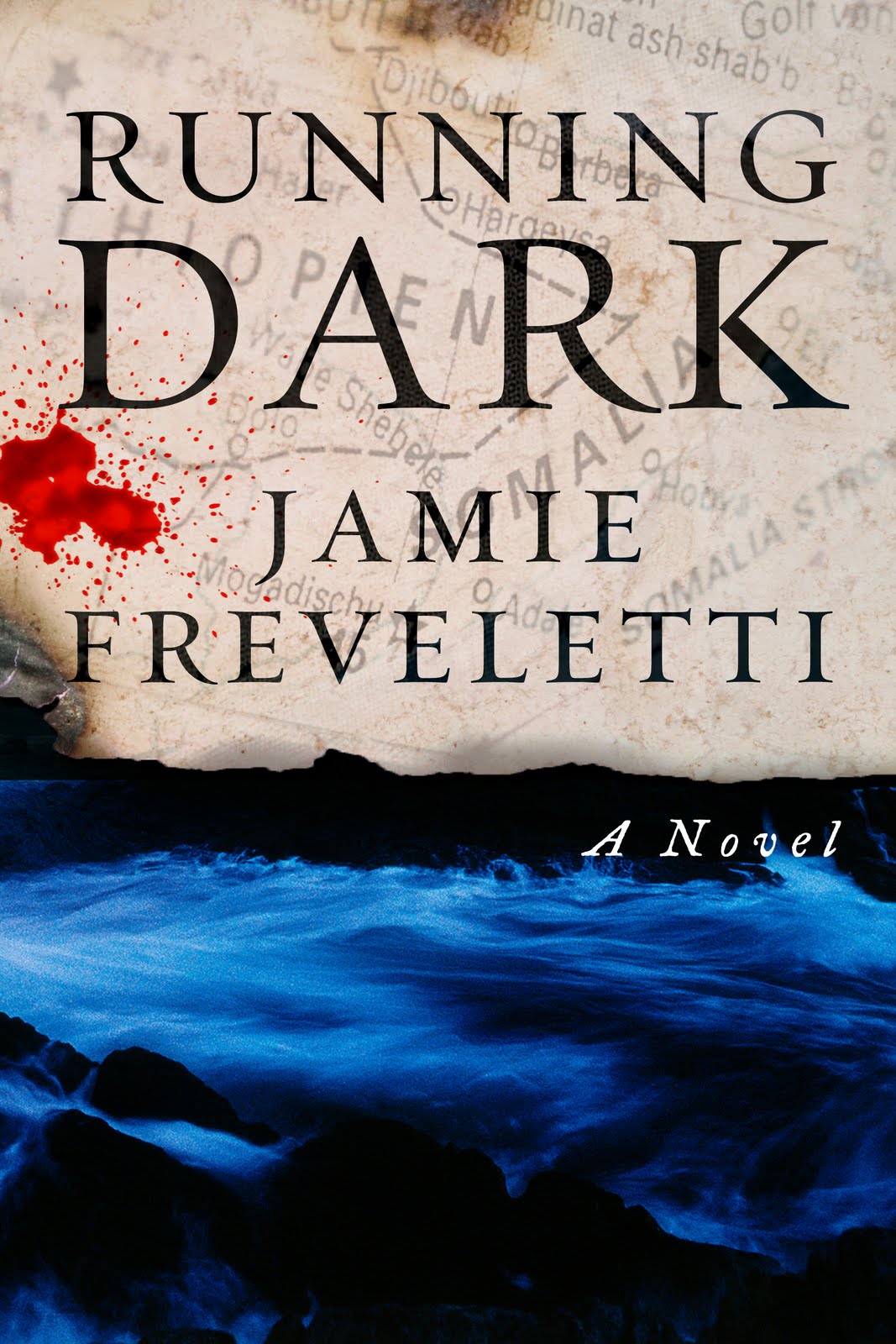
Yesterday my second novel, Running Dark, launched. It was a banner day. I am officially no longer a “debut” author. Here’s what I learned in my first year of as a published author:


1. Debut authors have a special place for a short while

When you’re debut, reviewers take an additional look at you. They, like everyone else, want to know about you, your book, and what you write. This is especially beneficial and, I think, appropriate. You’re a new quantity. With any luck, some of the now dwindling review space will go to you.


2. The story is king

People want to hear about the story. Yes, those who are unpublished and writing their own manuscripts want to learn a bit about how your particular story got to market, but the majority of readers want to hear the story.


3. Marketing—it’s a strange and unusual pastime.


Every author out there feels the pressure to market their novel and I’m no different. Running from the Devil launched in the worst economic downturn in forty years. People who used to buy hard cover books without a second thought were thinking twice. Established authors saw fifty percent declines in their sales. Asking readers to take a risk on a debut author was asking a lot.

While this may have created an argument for more intensive marketing, I’m not sure that marketing sells a book. I did the usual things authors do: blog, tour, and attend conferences, and the book sold, but I did none of these things in Germany and there the book hit the bestseller list and continues to sell at a rapid clip. Same story, no additional input from me. I find that interesting.

I’ll continue to focus on the writing, do what I can when it’s launch time and let the marketing team in New York run with it. Between us, we’ll get it done.


4. Keep your head about you and your ego in check.

It’s a heady day the day your first novel appears on the book shelves of your local bookseller. If it sells well, you feel great. Don’t, however, fall prey to your own press clippings. You’re an author, you didn’t cure cancer. Do your best not to act as though you did.

Like most things in life, a career is a marathon, not a sprint. Know what you want and ask for it, but keep your expectations in line with reality. Try to be nice, it will pay off. Watch out for the users and fakers and liars. Find someone in the industry you can trust and listen to their advice.


5. Enjoy every minute.

I’ve worked a lot harder jobs than this. Being a lawyer is intellectually stimulating and lucrative but also grueling, being a waitress can be stressful and exhausting, and making candles--my first job--was hot, dangerous, and cemented my desire to go to college. Only the toughest survived that job, and I wasn’t one of them


Being a writer is a strange alchemy of imagination and work, but it’s fun and magical. My publisher just picked up books three and four and so I’m employed for a while. I intend to enjoy every minute of it.


My heartfelt thanks to all the readers out there who made it possible.


Tuesday, March 09, 2010

Writers, The Oscars, and “Sickly little mole people”

I laughed at Tina Fey and Robert Downey Jr. when they faced off while presenting the original screenplay award. Their byplay was light, comic, and had just the right amount of truth about how writers feel about their words.


But the question remains: are we writers “sickly little mole people?”


Perhaps.


I’m debut, so I have a fresh view of this new world that I’m frequenting, and I can tell you that as a group I find writers to be friendly, interesting, curious, intense, and laugh out loud funny. They’re often quite a bit more relaxed than lawyers, (the world I inhabited for most of my career) and definitely less stressed.


There is an aspect to crime, mystery, and thriller writers that goes a step further. They’re excellent observers of people, and are able to inhabit the mind of their antagonists with often haunting reality, and, yes, this tends to lead to some peculiarities among them. There are some who retreat to their condos for days at a time, emerging only to get a restock of the whiskey and some bagels, some who spend their time writing from midnight to five am and then sleep all day, and some who are so impressed with themselves that they forget to be gracious.


I imagine that you can think of a few people in your own profession that act exactly the same way. The deal with writers, though, is that we can do all this to an extreme, because others will shrug, call us “creative,” and give us a pass. If you’re the nurse working the day shift and showing up late for work, you probably won’t get the same consideration.


I couldn’t help but agree with Tina Fey, though, that for all their quirks, writers create the stories that the actors bring to life, and dialogue in the story is often the key to the telling when you're dealing with a screenplay. A writer sweats blood to have a character say just the right line at the perfect time. If the writer does her job, the dialogue should fit the character, advance the story, and seem completely natural. For an actor to improvise and change the line can often defeat the purpose. It’s a little like working with an editor. They give you nudges, debate the merits of a line, paragraph, or word choice, and in the end it becomes a bit of a compromise between you as to how the sentence will finally read.


While I laughed through the interchange between Downey and Fey, I still knew that Fey was on the better side of things. I’ll bet she wrote the “sickly little mole people" line that Downey used as the perfect retort. After all, she’s a writer.


Sunday, September 13, 2009

I Have Always Depended on the Kindness of Mystery Writers

by Libby Hellmann

Over the weekend the Chicagoland Sisters in Crime chapter sponsored a one-day conference in Schaumburg, a Chicago suburb. It was a lovely event, and the hard work Annie Chernow and librarian Susan Gibberman invested was appreciated. Any time they let us out of our cages to interact with people, it’s a plus.

As authors, we were treated to lunch and during the meal a group of us sat together. Normally we talk gossip and shop: who’s publishing, the future of publishing houses, bookstores, the impact of e-books, or the Biscottes they serve on Northwest Airlines. This time, though, it was different, and it’s one of the reasons I love being part of the mystery community.

I don’t think I’m talking out of school to say that Outfiteer Laura Caldwell brought up a plot problem with the mss she’s currently writing. As she described it, suddenly all of us started brainstorming possible solutions. One of us came up with one idea, someone else had another, and finally, someone else (OK, it was Joe Konrath) came up with an idea that we all said, “Yes. That will work!” Laura said, “OMG, I never thought of that!” Problem solved.

That emboldened me, and I described a problem I was having in my mss. Before I'd even finished, people were firing suggestions. I was reminded that my protagonist has to be active, not passive, and that the motivation for murder has to be carefully crafted. You know that moment when someone gives you an idea, and you know unquestionably that it’s the right one? Well, that happened, and I found a way around my problem.

This isn’t the first time I’ve been rescued by other authors. A few years ago Michael Dymmoch, Barb D’Amato, and I were driving to Indianapolis for an event. At the time I was going through a divorce and my best friend was dying of cancer. Not surprisingly, perhaps, I’d written myself into a corner. They spent nearly the entire drive helping conceptualize my way out of the abyss.

There are other times I recall, as well: driving cross-country with Cara Black brainstorming plots, riding around the Midwest doing the same with Kent Krueger, phone conversations with Joe Konrath or Sean Chercover.

What other community can you think of in which your competitors take the time and effort to make sure you produce the best product you can? I can’t think of any. That’s why I love this community. And will always depend on the kindness of mystery writers.

Wednesday, September 02, 2009

Scavengers

by Michael Dymmoch

Hear the word and you think buzzards. Right? Or rats. Or mangy dogs in third world cities. Or maybe small children in the garbage dumps of Mumbai or Rio. If you live in a city, you may envision homeless entrepreneurs who roam the streets with purloined grocery carts, collecting cans and freegan food . Or scrap metal collectors in pickup trucks with weird assemblages of metal objects projecting upward from their truck beds. Yup. Pariahs.

But think writers, too. Think photographers. Think artists. All of us take our materials where we can. One of my first writing teachers advised me to hang out in restaurants, bus stops and bars to eavesdrop. Great advice. Some of my best lines are borrowed (Okay stolen—I’m never giving them back). Some of my best settings are places I came across in transit or discovered when I was looking for somewhere else. Many of my favorite characters are riffs on real people I’ve seen or clashed with. Like Poke Salad Annie…

Thinnes had asked the District Nineteen, Twenty and Twenty-three officers to keep an eye out for the bag lady. Patrol found her sitting on the steps of a doorway to the apartment over a store on Argyle. She had all her earthly belongings in a wheeled, wire shopping basket, and she knew her rights well enough to insist the officers bring her stuff along to the station. They brought her to the District Nineteen desk and waited with her until Thinnes came down to take custody.

He hadn't spoken to her at the scene of Thomas Redbird's murder, but he recognized her—a small, skinny black woman, much older, according to her record, than she appeared. Her teeth were too perfect to be original equipment, and her hair too black. The wig was so excessive it reminded him of Dolly Parton's. She was sitting on the bench next to the Community Relations office. He watched her for a few minutes before going over to introduce himself. Poke Salad Annie, a.k.a. Layde Bird Johnson, a.k.a. Melanie Moonshine, a.k.a. Alice Mayhem. She must have had enough gray matter, once, to have a sense of humor. Now, she seemed kind of vacant.

She also had an extensive arrest record: possession, prostitution, assault, and aggravated battery. Her most recent arrests, though, were bullshit: trespassing, disorderly conduct, and petty theft.

He didn't even consider dragging her upstairs with her stuff. He sat her down at a table in one of the district interview rooms. It was small and close, and breathing the same air with her was almost enough to make you high. She must have had a BAC two or three times the legal limit. She took off her coat—a ratty fur—and carefully laid it on the far end of the table. She seemed to be wearing a whole jewelry box full of costume jewelry, and three or four outfits, one on top of another. It reminded Thinnes of a little girl playing dress up. He didn't comment as she fished a pint of cheap whiskey out of a pocket, opened it, and took a swig. Her trinkets jangled as she threw her head back and slugged it down. "You know why they call me Poke Salad Annie?"

Thinnes grinned. "You were busted for marijuana possession and told the arresting officer it was poke salad greens."

She gave a whiskey-voiced laugh and nodded. "I was beautiful once. Men wanted me." She leaned back and squinted at him. "Bet you find that hard to believe."

"No. You've got a sense of humor. That's more important than looks."

She pointed at him with an index finger bent by arthritis. "You all right. I s'pose you want I tell you 'bout the man was killed." He nodded. "Elvis done it."

"The Elvis?"

"Hunh! I ain't that drunk. I never been that drunk."


I guess I’m a writer because I’m not fast enough to be a great photographer. If it’s standing still, I may get my camera out in time to capture it, but moving subjects either wander out of frame before I can focus or blur because I moved the camera.

Images I store in my head are usually easier to file and retrieve than photographs. (I have a great photo of a guy with all his possessions in a grocery cart, but I don’t remember where I put it. ) I’ve taken thousands of shots over the years, but when I don’t recall the date or venue, I might as well not have it. On the other hand, when I can’t remember the details of a memory, I just make something up.

Picture this…

A rusty grocery cart blocking the curb lane of LaSalle Street, downstream from an intersection and in front of a bus shelter similar to this one.

The cart is filled with plastic bags from various retailers and has an aluminum gutter jutting upward like a ship’s mast sans sails. Adjacent to the shelter, the owner of this dubious conveyance is leaning casually on one of three newspaper boxes with his newspaper spread out across the box tops. He’s dressed in the uniform of the homeless—ball cap and nondescript hoody, baggy pants and high-tops. He appears oblivious to problems his cart creates for motorists and CTA riders. Where is the ticket brigade when you need them? (Yes, some of these details are confabulated. I wish I’d had my camera with me.)

I believe all artists are scavengers, just a socially acceptable variety.

What do you think?

Friday, September 19, 2008

David Foster Wallace, RIP

by Marcus Sakey

As you can't possibly not have heard by now, last Friday David Foster Wallace hung himself.

The thing about the death of a famous person whose work you admire — or, in the case of DFW, flat-out love — is that it's a loss at once personal and abstract. I'd never met Wallace. I don't really have the right, the emotional props, to grieve for him as though he were a friend.

And yet at the same time, I knew one part of him better than I know the inner minds of some of my nearest and dearest. There are plenty of writers out there whose novels don't betray what's under their own hood, but he wasn't one of them. Reading Wallace was a singular experience, an exhilarating brush against a brain of staggering capability, that was trying, always, to reach you and tell you something about the world, maybe something deeply true and important.

His second novel, INFINITE JEST, is generally considered his masterpiece. As it would have to be; it's 1079 pages long, including about 100 pages of footnotes. It's a staggering work, satirical in the extreme, often laugh-out-loud funny, and yet also unrelentingly sad. Wallace was one of those rare writers who could short-circuit your emotions, have you swinging from misery to hilarity and back again in the space of a page. It's not an easy book, and it's one I've stopped recommending to people because it's not everyone's taste. But while it isn't easy, it's also not challenging in a force-yourself-through-it way. No, the challenge is in trying — and failing — to keep pace with a genius.


I've read INFINITE JEST twice. The first time in 1998, when I lived in Atlanta, worked in television, and the woman who is now my wife was my girlfriend. Again in 2003, when I had built and then lost a million-dollar graphic design company, and was unemployed in a Chicago studio apartment, toying with my old dream of writing a novel.


DFW LINKS
  • The L.A. Times Obit
  • My favorite tribute article, in Newsweek
  • DFW on Charlie Rose
  • The Howling Fantods fan site
  • Wikipedia's DFW entry
  • His commencement speech to Kenyon University

  • When I heard about his suicide, I picked it up again. Again, my life is wildly different; I'm married, and as of this afternoon, 229 pages into my fourth book. But I remain astonished by everything it accomplishes, and I'm loving it more this time around than any other.

    I can't really give you a synopsis. It's just not possible. Let me say that it's a near-future novel about the pursuit of happiness and the near impossibility of communication. It's a wicked satire filled with joy and sadness and gleefully prescient dread.

    An example.

    In the book, most of which takes place in the corporate-sponsored Year of the Depend Adult Undergarment, America has "given" Canada large chunks of the north of our country, and then proceeded to use those areas as our literal garbage dump, packing waste from every corner of the country into canisters and slinging it via massive catapults into a festering heap of filth and disease, around which we have built a Lucite wall topped with massive "bladed air redistributors" to blow the clouds of toxic waste back where it belongs. As a consequence of which, besides rapacious packs of feral hamsters, a notable portion of children near the Concavity, as it's called, are born without skulls, which makes life and love a little difficult. But not impossible, as a legless Quebecois terrorist, member of a much-feared organization known as the Wheelchair Assassins, discovers when he falls in love with one, and in order to get proper medical care for his skull-less wife, he works as a triple-agent betraying his comrades to the very nation that caused his wife's condition in the first place.

    This is one minor thread of a very big tapestry.

    Taken on its own, the above probably just comes across as silly. And there is whimsy to it, no question. But Wallace injects so much social commentary and exploration of the human condition into these ridiculous premises that as you read, his world becomes more real than your own.

    I'm 200 pages into this third read of IJ, and I'm in love all over again, and it breaks my heart, because there's no more coming. Sure, there are essays that I haven't read, and a short story collection. But there's not another grand masterpiece, another cultural earthquake of a novel. And the kicker is, as brilliant as his work was at 32, can you imagine what it might have been at 60?

    We lost a giant last week.

    Wednesday, August 22, 2007

    Writer

    To be a writer is to be an outsider, never 100% part of the group, always watching, weighing, thinking 'how does this read as a scene?’ To be a writer is to be objective for the most part—if you want your fiction to be believable, your non-fiction to be taken seriously. To be a writer is to be a scavenger, letting nothing pass, go, disappear or die.

    I remember reading something once, by another writer--can't remember his (her?) name—about how he'd stopped writing. He'd become appalled by the way he was using everything, every fight, every joy, every tragedy in his life. He'd come to find he didn't like himself, come to think of himself as some kind of scavenger or vampire or parasite--I don't remember exactly. But that's the gist.

    I don't feel that way. Learning to write gave me—for the first time in my life—some purpose for the obsessive habit I’ve had since childhood of standing outside myself and observing—my own feelings and ideas as well as other people's. Learning to write put my habit of analyzing every encounter and social exchange to good use. As a child, I thought I was abnormal in these traits—and I was. But as I discovered other artists, I found that this abnormality is ubiquitous.

    That’s my take anyway. Are you a professional voyeur? Does it ever make you feel guilty?

    Sunday, August 19, 2007

    In Case Newsweek Lost My Number

    by Marcus Sakey

    My wife is a Newsweek junkie, and turned me on to a new sidebar they've been running. It's called "A Life in Books," and involves asking famous authors about the five books most important to them, which 'Certified Important' book they haven't read, and a classic that disappointed upon revisiting. It's an addictive little addition, and to my delight, they've been picking authors from all genres: one week Elmore Leonard, the next Jonathan Safran Foer. Some try too hard to prove how smart they are, picking obscure texts in the original German; some try too hard to be funny, going for the laugh instead of the truth. But by and large, you get an interesting peek at the reading habits of a pro.

    As one of my favorite guilty pleasures is snooping people's bookcases, this is custom-designed for me. Unfortunately, I'm guessing that Newsweek probably has a few people on their list before they get to me. And as I was born without the patience gene, I decided hell with them; this is what the Outfit is for.

    Thus, I present to you the Marcus Sakey version of "A Life in Books," a la Newsweek. I'm hoping some of you guys will post your own versions as well.

    MY FIVE MOST IMPORTANT BOOKS

    CLOUD ATLAS, David Mitchell.
    A virtuosic piece of writing singing a heartbreaking story about life and time and hope and the way things move in a circle. My personal favorite book.

    NEUROMANCER, William Gibson.
    Not just a fantastic read, but also a textbook for how to write. I learn a new technique every time I read it.

    THE GREAT GATSBY, F. Scott Fitzgerald
    Pretty much the great American novel of its day. The best part is the way Fitzgerald makes everybody, even the reader, culpable.

    BLOOD MERIDIAN, Cormac McCarthy
    A fever dream. McCarthy throws away more brilliance in offhand passages than most people can pack into a whole novel. It's challenging, and there's plenty I'd hate to have to explain in front of the class, but it's worth the effort.

    CAT'S CRADLE, Kurt Vonnegut
    A comedy pretending to be a drama pretending to be a comedy, and a profound and empathetic portrait of humanity. Part of Vonnegut's charm is that he expects people to fuck everything up but loves them anyway.


    A Certified Important Book you still haven't read:

    MOBY DICK, Melville
    I actually made it about 200 pages and then lost steam. But I'm going back to it someday.


    A classic that, upon rereading, disappointed:

    THE BROTHERS KARAMAZOV, Dostoevsky
    I liked it fine, but didn't think it came anywhere close to living up to the accolades. Plus, to me, the philosophical issues seemed like three a.m. dorm room debates, and just about as deep.

    Having done it, I have to say, it's a pretty interesting exercise. Cutting the list to five books is brutal--it's hard not to go for type, like you're mixing all five to create a composite of the stuff you like.

    Which, looking at my list, would be one hell of a strange novel.

    Your turn. Pretend Newsweek is calling. Tell me about your life in books.

    Monday, April 23, 2007

    Vonnegut, Propaganda, and Fox

    by Libby Hellmann

    As writers we know the power of words. We choose them carefully – rooting around sometimes for hours or days just to find the right verb or adjective. We respect the differences and shadings, however minute, that specific words connote. We understand that the right words create a mood or perception in which the whole is bigger than the sum of its parts.

    We also recognize when others do it effectively. When novelists do it well, it’s called good fiction. But when the guardians of the nation’s airwaves do it, under the guise of disseminating information, it’s propaganda.

    Which is why I’m still appalled at a story on Fox News. (Thanks to J.D.Rhoades for blogging about it last week. And to Judy Bobalik who drew my attention to it)

    Okay. We all know Fox is no friend to liberals. We know how they shade stories, particularly political ones, to suit the right-wing. We know how they use code words to inflame or champion whatever the right wing’s sound-bite du jour happens to be, whether it’s government’s, administration’s, or some corporate entity’s.

    But this wasn’t a political piece. At least it wasn’t supposed to be. This was an obituary of Kurt Vonnegut. A recounting of his life and work. Notice I didn’t say “tribute” – that’s not the role of the media. They are simply there to recount the facts -- put them in an order for us – the public -- to interpret. And whether you like his writing or not, the fact is that Vonnegut was a major figure in American literature.

    Except you wouldn’t know it by Fox’s piece.

    The reporter went out of his way to discredit Vonnegut at every turn. In his first sentence, he mentions Vonnegut’s “leftist screeds.” He goes on to talk about his “despondent leftism”… He labels Vonnegut “irrelevant” and “quirky”… He makes sure to mention his suicide attempt (okay that’s fair game…), his scatological humor, his send-up of New York literary society. Like I said, a little of that is appropriate, but, in making sure he mentioned all of Vonnegut’s imperfections, he missed the entire point of the man’s significance.

    Sure, Vonnegut was unabashedly left-wing. And anti-war. But people read Vonnegut because he was an antidote to the powers that be. He saw through the artifice and the propaganda and the BS of his time, and he did it in a way that was entertaining, clever, and, ultimately, moving. People read Vonnegut because they knew they could count on him to see the Emperor with no clothes, at a time when the prevailing voices said otherwise.

    But there was no word about that in the report. The reporter either deliberately chose to ignore the man’s relevance (How could anyone call Vonnegut “irrelevant”?), or his bosses ordered him to, or he’s as dumb as a box of rocks.

    What ticked me off the most, though, was the opening line of the report. It was – well –supremely arrogant. “Vonnegut wouldn’t have wanted a classical send-off… (or something to that effect).. so here’s the Cliff notes version.”

    Says who?

    How does this Fox reporter presume to know what Vonnegut wanted? He made him seem like a cranky old man, rather than the literary giant he was. Now, if Joyce Carol Oates or Tom Wolfe or Stephen King or some other literary figure had made that comment, maybe I’d give it some credence. Maybe. But a reporter?

    But then, that’s Fox. They just can’t stop.

    Here’s the link to the obit: http://www.youtube.com/watch?v=2ysH-oIEDfo

    What do you think?

    Friday, April 13, 2007

    Ad copy

    by Michael Allen Dymmoch

    I spend a shameful amount of time watching commercials. My favorites are the “priceless” Master Card ads, especially the one with the elephant, and the Verizon wireless network come-ons with the “Can-you-hear-me-now?” guy leading his minions. Capital One had a good thing going with the pillagers, and the Frog Prince take-offs were cute the first dozen repeats, but their family-on-a-hobo-vacation campaign was pretty lame. Volkswagen’s circa 1070 campaign—“Ever wonder what the guy who drives the snow plow drives...?”—is still in my head. And their more recent “Round for a reason” series was entertaining.

    What ads have to do with writing fiction—beyond the fact that most are entirely fictitious—is that the best commercials are short stories, thirty or sixty second movies aimed at holding your attention—or at least keeping you from hitting the remote--and at getting you to buy something. (And I did, recently, purchase a VW.) Writing good short stories is hard. (Not that great writers don’t make them read as if they’ve fallen from the lips of God.)

    In his educational and extremely entertaining book, Bambi vs. Godzilla, David Mamet deconstructed Jack in the Beanstalk with a five step outline for screenwriters that could as easily be used as a guide for writing short stories, even novels:

    “ONCE UPON A TIME....

    AND THEN ONE DAY...

    AND JUST WHEN EVERYTHING WAS GOING SO WELL...

    WHEN JUST AT THE LAST MINUTE...

    AND THEY ALL LIVED HAPPILY EVER AFTER.”

    Filling in between the headers is the trick. In a short story, every detail is crucial. Even in novels the trick is deciding which details to include. To quote Edmund White: “Because a novel—these words—is shared experience, a clumsy but sometimes funny conversation between two people in which one of them is doing all the talking, it will always be tighter and more luminous than that object called living.... Living is all those days and years, the rushes; memory edits them; this page is the final print, music added.” (The Beautiful Room is Empty)

    I was asked to write catalog copy for my next novel (currently without a title as my editor dislikes MIA). What is catalog copy but advertising—a story told in service of seduction? Being better able to appreciate ads than write them, I’ve used Mamet’s outline as my guide. See what you think.

    “ONCE UPON A TIME” there was a happy family, the Faheys—Mickey, his wife Rhiann, and stepson, Jimmy.

    “AND THEN ONE DAY” Mickey died. Rhiann was nearly paralyzed by grief. Jimmy started cutting school and drinking.

    “AND JUST WHEN EVERYTHING WAS GOING SO WELL” Deputy Sinter, an old friend of Mickey’s, showed up and tried to hit on Rhiann. John, a mysterious stranger, moved in next door, offering Rhiann beer and sympathy, giving Jimmy help with his car and an after school job.

    Jimmy decided to dig around the roots of his family tree. While visiting estranged relatives, he ran into Steve, a high school friend of Jimmy’s mother and birth father. Jimmy also met a cute girl and got in over his head with her.

    Jimmy’s involvement with his relatives led Rhiann to revisit relationships from long ago and wonder what became of old friends and lovers.

    Jimmy crashed his car and ended up in intensive care.

    John donated blood. He gave Rhiann rides, help around the house, comfort.

    Creepy deputy Sinter tried to discredit John, then tried to beat him to death. Rhiann came to John’s rescue with her dead husband’s gun. She discovered John was not what he’d seemed.

    Which led her to investigate him. And see him in a different light altogether.

    Which led Sinter to try to kill them both, ending up in jail.

    Jimmy came home from the hospital. He tried to elope with his girlfriend, was nearly beaten to death by her father, then rescued by Rhiann and John. Their lives all seemed to be changing for the better.

    “WHEN JUST AT THE LAST MINUTE,” creepy deputy Sinter, out on bail, went after Rhiann again...

    This is a novel, not a fairy tale. I’ll leave it to you to read the book (spring 2008, Title TBA) and decide whether I followed the outline to an end where “THEY ALL LIVED HAPPILY EVER AFTER.”

    So what do you think? Would you buy this book? Or should I give up advertising and stick to novels?