Showing posts with label CIA. Show all posts

Sunday, February 06, 2011

Two Sixties Stories

by Libby Hellmann

Following are two stories from the Sixties. Both are true. An abbreviated version of one is in SET THE NIGHT ON FIRE, but the other has an ending I just discovered, so it’s not in the book.

I lived in Georgetown near here during what I now call “The Summer of My Discontent.” I shared an apartment with four other people above a movie theater at 28th and M. (Both are gone now). I was working at an underground newspaper, selling them on the streets, and generally trying to make sense of the world. Next door to the movie theater was a head shop run by a weird – but sweet -- guy named Bobby. He wore black all the time, before there were Goths. The scent of Patchouli oil hung in the air.
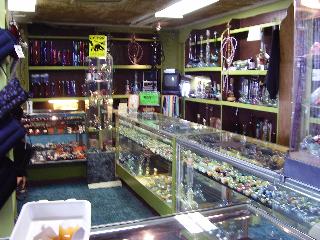
I used to drop in every once in a while. Often two of his friends, Donna and Linda, would be there. They were a couple: Linda had long brown hair and appeared to be kind of spacey. Donna had short blond hair and wore a leather jacket, even during July. They were cool, though, in the way that everyone was cool back then, and we’d smoke a joint, laugh a lot, and discuss what a shitty place the world was becoming. Then, around August, they disappeared. After not seeing them for a week or so, I asked Bobby where they went. He hemmed and hawed and wouldn’t tell me. Finally, he did.

Donna used to be Don, he said. And was going through the process of becoming a woman, but hadn’t completed it when she met Linda. They fell in love, and because of that, they jointly (no pun intended) agreed that Donna should turn back into Don. So they hustled some money from someone and were off to California to reverse Donna’s transformation.

I never saw them again. But I still think about them.

The other story is more political. As I said, I worked at an underground newspaper in DC for a summer. I was just a flunkie, not even considered staff. But there was a photographer, Sal, who was in and out all the time. He took photos at every demonstration, interview, and event that could be considered “alternative.” I actually had a crush on him at one point. (Yes, I know. Very bourgeois).

At any rate, the editor of the newspaper was very cautious about trusting people, almost to the point of paranoia. He always thought the paper was being infiltrated by CIA or FBI types (these were the days before COINTELPRO proved the FBI was indeed infiltrating radical groups) At the time, I thought his paranoia was exaggerated. Triggered perhaps by an inflated sense of self-importance.

I left at the end of the summer to hitchhike across country (That’s a different story), but I heard a few months later that Sal had left too, and was off to Paris. He stayed there for a while, then disappeared. I never knew what happened to him. Then, about a month ago, well after I finished SET THE NIGHT ON FIRE, I Googled some of the people from the newspaper. Suddenly a photo of Sal popped up. It turns out he had been featured in Secrets: The CIA's War at Home by Angus MacKenzie.

Yup. You guessed it. Sal had been a CIA agent, recruited when he was in college in Chicago. The entire time he was taking photos for the paper, he was reporting to his CIA handler. Eventually, I think the editor suspected him. Maybe he even confronted him, which precipitated his abrupt departure.

It doesn’t end there. According to MacKenzie’s book, Sal went to Paris, befriended Philip Agee, himself a former CIA agent turned whistleblower, and fiddled around with the typewriter on which Agee was writing his story. Agee discovered it, and Sal fled. From what I understand he changed his name and now lives in Southern California.

True stories. Really. I mean, who could make this stuff up?

Tuesday, April 29, 2008

Fun at Chicago's Field Museum

It was a scene straight out of Ross Thomas, or even V I Warshawski: black limos pulling up in front of a marble facade, security guards and city cops surrounding the people as they got out, whisking them inside. Across the street, a handful of people without influence, harassed by the cops for trying to hand out leaflets.

At the end of the novel, justice somehow triumphs. At the end of the morning in Chicago, money won.

What was the story? Jeppesen Dataplan, Inc. is a wholly owned subsidiary of Boeing Company. An ACLU lawsuit charges that Jeppesen has sold direct flight services to the CIA that enabled the delivery of captives in U.S. custody to secret overseas locations where "friendly governments" as well as CIA operatives carried out their torture. Boeing refuses to provide information on the subject; and the judge hearing the case accepted the CIA's claim that any pursuit of the matter in court would breach necessary government secrecy; this ruling is currently under appeal.

Boeing shareholders were meeting at the Field Museum on April 28; I was part of a small band who went to inform the shareholders that their company is directly involved in torture.

Police and museum security forces came to our ten-strong group of protesters and told us we were confined to a tiny space about a quarter mile east of the museum entrance, that if we wanted to hand out material or talk to anyone, that was our “first amendment” space. As protesters, we could not be on sidewalks or streets because we were a hazard to public safety. Nor could we be on the museum grounds because they were private property, not covered by the first amendment.

I left the protest and went to sit on a curb looking at the shareholders as they arrived. I took pictures with my cellphone, but I confess they weren’t clear enough to shame anyone. It started to rain; people stopped arriving; I began texting a friend.


Suddenly two cops and a museum security man appeared and demanded to know what I was doing.

Me: “I’m sitting here sending a friend a text message.”

Cop 1: “And then what do you plan to do?”

Me: “I don’t know. Perhaps telephone my husband. Is any of this illegal?”

Cops1 & 2 take off. Another cop drives up.

Cop 3: What are you doing here?

Me: I’m a citizen out for a walk. I don’t know why I should be accosted for that.

Cop 3: Accost? No one accosted you. They were just making conversation.

Museum security man: Come on, let me take you to see (and he named two people I didn’t know.)”

Me: I don’t know them.

MSM: You were just talking to them.

Me: I’m a Chicago writer. I enjoy events involving my city—I get lots of good ideas for stories that way. And I think it’s wonderful that the museum pays such personal attention to every citizen who happens to be nearby.

3rd cop: What are you doing here?

(A 4th cop, on a bike, arrives and plants herself between me and the parking lot.)

Me; I’m a citizen. I didn’t know there’d be so much interest in a citizen taking a walk in the morning.

MSM: Let me walk you over to the protest. Come on.

Me: I’m gathering material for my work. Let me have your name—I’ll be glad to include you in my blog posting.

MSM leaves. Cop 3 tells me to keep my feet out of the parking lot—my butt on the curb is okay. A young woman arrives with fliers about Jeppesen and its torture. She can stand next to me holding them, but Cop 3 tells her she cannot hand them out unless she is standing in the “first amendment area.” I call the ACLU to find out what the law is regarding handing out fliers and leave a message.

End of my part of the story. Later, I learn that some nuns with the 8th Day Center for Justice were at the shareholders meeting because their religious order owns some shares in Boeing. They introduced a human rights resolution, discussing Boeing’s involvement in torture, and at least forced shareholders and management to listen to what their company is doing.


These Sisters are heroic, but they didn’t change the outcome for our country’s engagement in torture. Ross Thomas would have found a way for them to force Boeing to scuttle their connection to the CIA. It would have involved a wonderful quadruple cross such as only he could carry off. Even V I might have managed a small victory. Me, I have spent the last 24 hours feeling utterly helpless.

And I wonder, too, about these things:

1, Why are Chinese risking their lives to protest their government’s behavior in Tibet, and why were there only ten of us protesting Jeppesen’s torture flights?

2. Does the First Amendment exist any more, when protest at the museum and at political conventions, and anywhere else, is walled off remote from public view? (Remember last summer when the police arrested Quakers at Taste of Chicago for advocating peace “too close” to an army recruitment booth?)

3. Why am I paying taxes for cops who protect corporations and harass citizens?

4. Who knew that the Field Museum's high ticket prices included paying for my own private security escort?

5. What is it about money that makes the museum’s security staff so obsequious to members of a corporation?

Sara Paretsky